Photograph by Michael Frazier
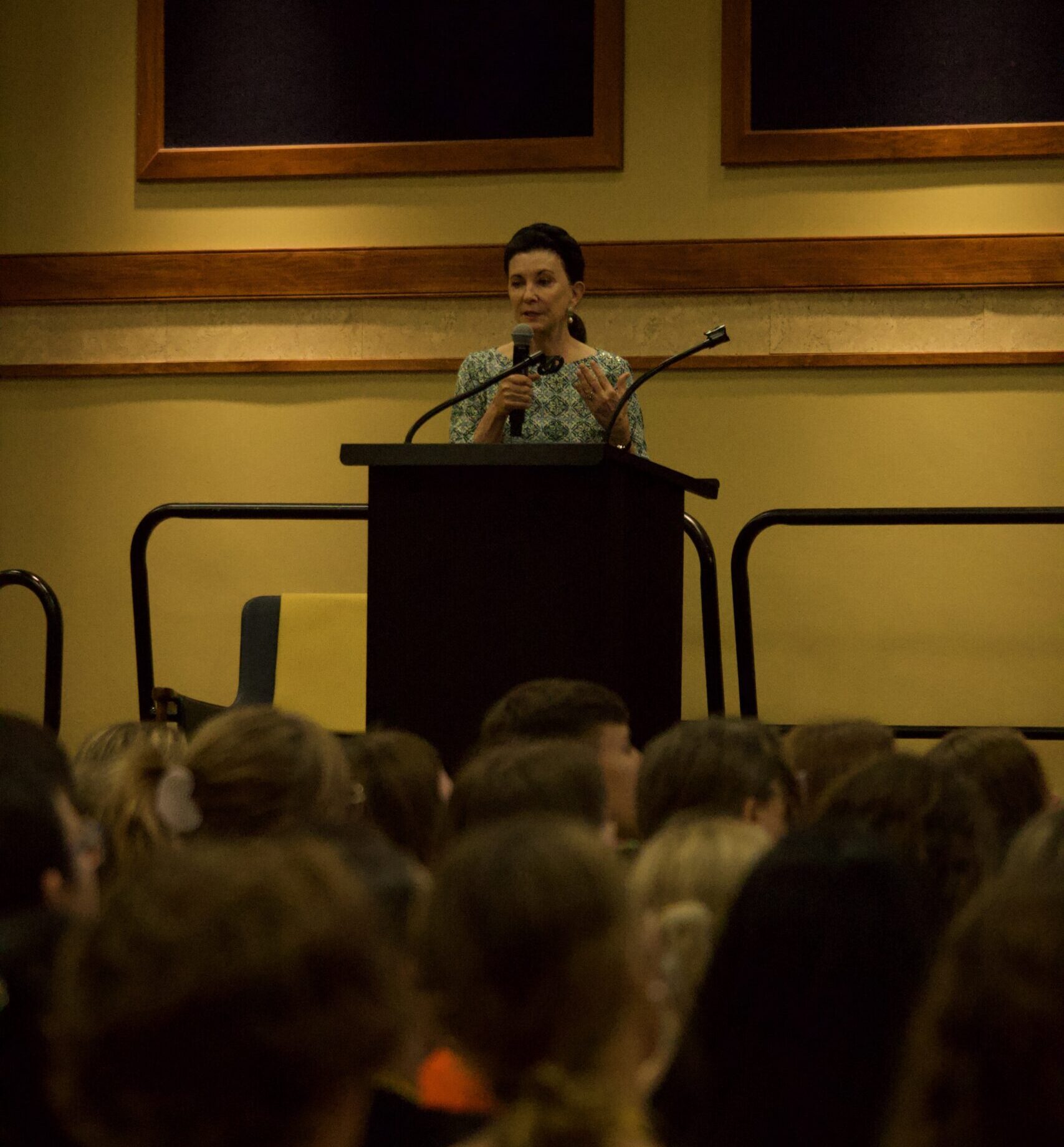
MURRAY, CURRIS CENTER (GSPost) – On Monday, June 29, Scholars attended their second convocation, hosted by Dr. Paula Gristanti.
Dr. Paula Gristanti is the CEO and founder of the National Stem Cell Foundation. She holds a DMD and an MBA; she is a member of the International Women’s Forum Kentucky, the Delta Dental of Kentucky Board of Directors, the Executive Women’s Alumni Advisory Board for UofL, and the Jewish Family and Career Services Community Advisory Committee. Her foundation funds adult stem cell research, access to clinical trials for children from low-income families, and the National STEM Scholar Program. Her dedication to her work is evident in the number of awards she has received from organizations such as Duke and Louisville’s Business First.
Dr. Grisanti spoke on the importance of stem cell research and innovation, encouraging scholars to explore stem-based fields in the future. Dr. Grisanti began her speech by introducing her foundation and its missions, and described the three platforms it operates on: research, education, and advocacy.
She structured her speech in a similar manner; first, by discussing the research that the NSCF does, and its impacts on real people. She shared stories of patients impacted by stem cell innovation and research, such as that of a young boy with sickle cell disease. Dr. Grisanti described the boy’s condition prior to treatment. He was unable to play with his siblings, walk upstairs, or go to school consistently.
One of the ways to treat sickle cell is with a bone marrow transplant, which originally required donors to undergo Myeloablative Conditioning (MAC) surgery and have a hole drilled into their hip bone to harvest the cells. The recipient of the stem cell transplant underwent chemotherapy in order to destroy all bone marrow cells for the implementation of the extracted bone marrow.
However, new scientific discoveries in the late 90s provided a modern and more efficient approach to bone marrow transplantation: Non-Myeloablative Conditioning (NMA) with Peripheral Blood Stem Cell (PBSC) Collection. The recipient undergoes low-dose chemotherapy, destroying a smaller amount of bone marrow cells, improving patients’ outcomes. The donor has stem cells harvested through an IV, similar to a blood donation, shortening hospital stay and increasing safety.
“You don’t need to be blasted with radiation and chemotherapy, you just need to make a little bit of room,” Dr. Grisanti said.
The boy was the first in his family to receive this treatment for sickle cell, and when Dr. Grisanti visited him just a year later, he was playing football for his school team and had grown much taller and stronger.
The same technology that had helped innovate bone marrow transplants has also been utilized to mitigate organ rejection. Recipients undergoing the new procedure no longer have to take anti-rejection medication; Dr. Grisanti explained this through an anecdote about a kidney transplant.
“If you can create drug-free tolerance for a kidney, you can create drug-free tolerance for anything,” Dr. Grisanti said.
After sharing these stories, Dr. Grisanti explained that all of that innovation and research would not be possible without continuous funding.
“Great research doesn’t move on with one-off funding,” Dr. Grisanti said.
She spoke about the gap in employment in the STEM cell field and explained how she realized the problem was rooted in the classroom.
“We need to fix that. We need more projects, we need bigger projects,” Dr. Grisanti said, driving home her point that the STEM field deficit begins with elementary education.
Scholars left the convocation informed about the need for young populations to be involved in STEM and the impact scholars could have on families across the country.
By Abigail Coty and Almir Memic | July 1, 2026