Photograph by Michael Frazier
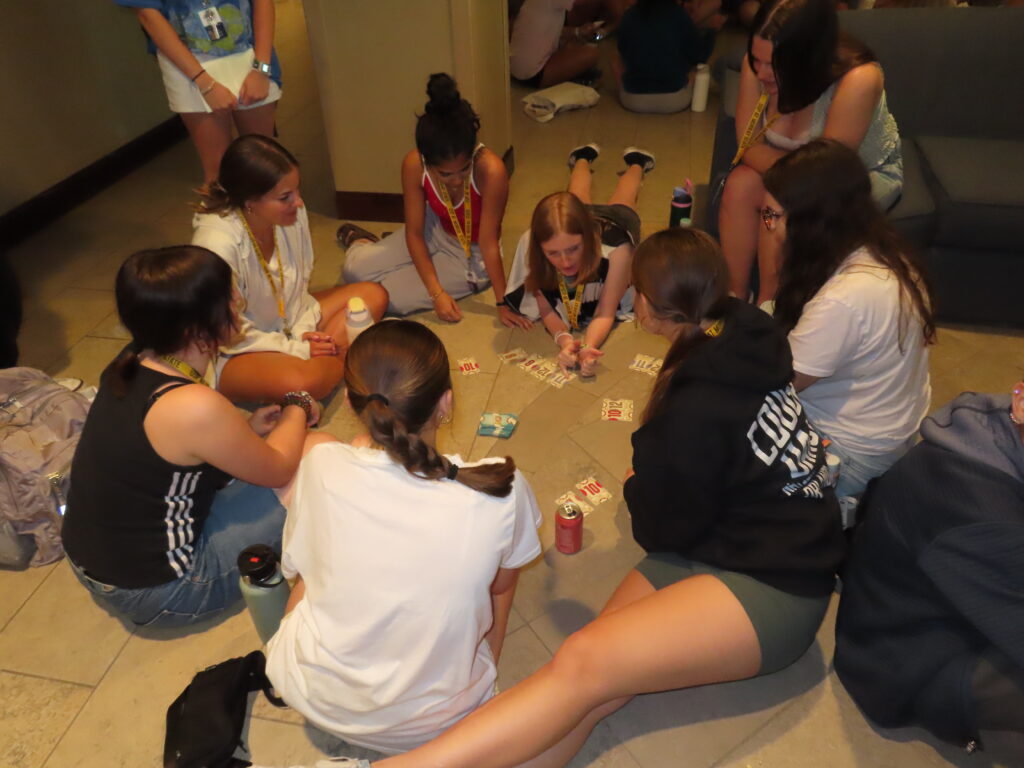
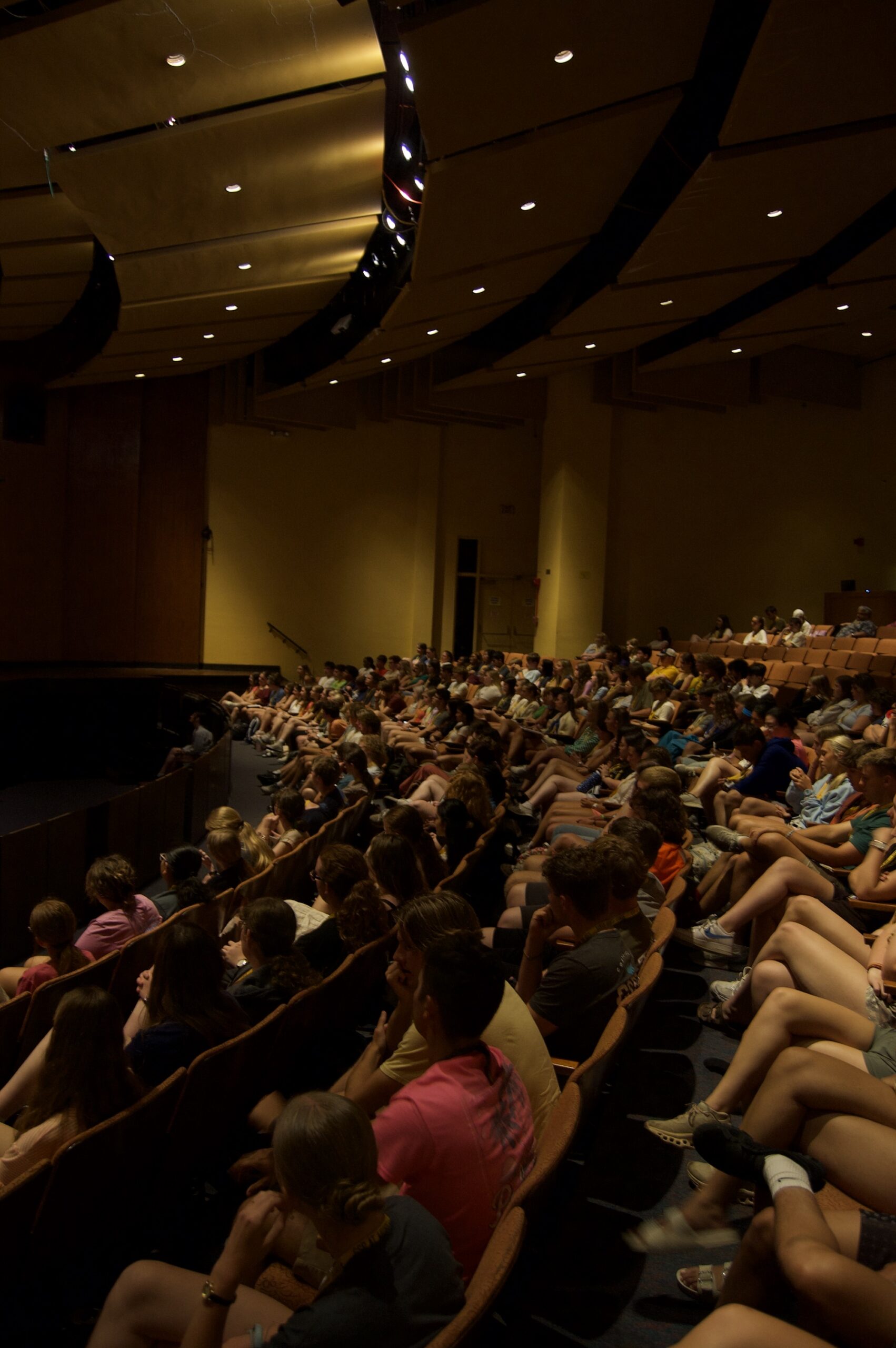
MURRAY, JOHNSON THEATRE (GSPost) – On Thursday, July 16, 2026, Scholars had the opportunity to attend the third session of “This GSP Life”. In this final edition, GSP scholars were able to impart their words of wisdom, advice, personal anecdotes, or stories about their time in the program. It allowed a platform for the community to connect in a personal way.
Abigail shared how she was lost and found her “why”. She had lost her spark in swimming, and it felt pointless. It had been a part of her identity for a long time, and for two months, she dreaded things that made her “her.” Abigail wanted to get over it and sought to do something easier. However, when she tried it, she would end up getting kicked in the face and getting a broken nose. She noted how it gave her time to watch her swim team practice and reflect. She realized that she was focused on time, not purpose, and lost sight of the joys of swimming. “I love how it feels to glide through the water,” Abigail said.
Wyatt expressed his former fear and how it would lead him to a passion for aviation. He was fifteen years old and waiting to board a plane from Chicago. It was his first flight, and he was worried about getting stuck, his ears popping, the descent, and having to be on three flights to get to his destination. When he was on the plane, it was silent until the plane started barreling down the runway. He loved the experience and the chance to see the skyline, realizing he would love flying, and he quickly became excited about the other flight opportunities ahead. Later, he ended up working on his pilot’s license and wants to become an airline pilot. “Who knows where I’d be without facing my fear,” Wyatt said.
Gwen shared her difficulty making friends. Before coming to GSP, she expressed how she was dropped by her friend group and boyfriend. She was worried about the program and created fantasies of what could happen. Gwen was worried about being a fraud until she met Emma. Emma spent time with her, helped her with laundry, and was always met with kindness. Gwen found a community in her hall and has been around the most helpful people. At first, she was terrified of the unknown, but now gets to meet new people every day. “Talk to someone new, compliment them,” Gwen said.
Murtaza shared that he lost himself due to his name and how he found people at GSP. In first grade, he didn’t want to go to school. His classmates and teacher couldn’t say his name and made a substitute for it. He had to change himself and make it easier for people to say his name. Murtaza felt his identity slip away and faced hardships due to his religion and ethnicity. He didn’t fit in his local community and was called “third world.” Once he stepped on Murray’s campus, people wanted to hear about the pronunciation of his name, details about his background, and more. He found that a change of his identity wasn’t needed to fit in at GSP. “Each of us is unique and be yourself,” Murtaza said.
Briley shared how you can learn something from everyone and the power of being a floater friend. Briley heard how people always find friends and belonging at GSP. She had met kind and remarkable people while being surrounded by groups of people. She became independent and friends with many people, becoming the “floater friend.” The GSP provided her independence but questioned whether she belonged. However, she became comfortable with herself and learned something from everyone, emphasizing being grateful and open-minded.
Jacob described the art of recovery and how he incorporated it at GSP. At the showcase, he was set to perform tap dancing, and ideas of self-doubt filled his head, making him want to walk off stage. During his act, he would end up falling but turned it into a part of his choreography. He received applause, and many people didn’t notice the mistake or thought it was part of his act. Then, a week later, he would be on stage again and would mess up on the lyrics. “If you want something done right, don’t ask me,” Jacob said. However, after Jacob makes a mistake, he takes a moment and recovers, barely leaving a trace of error. He expressed how, over the span of seventeen years, he learned the art of recovery, and it became muscle memory.
Nora expressed the importance of finding your identity without it being a list of accomplishments or titles. In English class, her teacher asked them to say “Who am I?” and write about that. Nora wrote that she was a soccer player, President of the tech chapter, etc. She realized that her identity was built of things that could be lost when she had difficulties walking. She had to take medication and injections, missing games and three months of school. At that moment, she couldn’t answer who she was. She spent every day finding the answer that isn’t superficial. “Listing accomplishments is easy, but a new group will take our place,” Nora said. She asked the audience, Who would still be left after?
Brady shared how a commonly spoken phrase has stuck with him recently. He would overlook the meaning of the phrase “Tomorrow is not promised.” He looked at it in a negative light, thinking about the possibility of the next day. It allowed Brady to open his eyes and made him want to spend the day at clubs, activities, etc. He made the phrase push him in moments and questioned how he wanted the day to look. It allowed him the opportunity to sing, dance, and give a speech at Showcase and GSPLife. He encouraged scholars to go outside their comfort zones and have fun. “Live every day as your last,” Brady said.
Caroline described the difficulty of making things permanent and having the power of persistence. She never wrote in pen, fearing making it final and imperfect. It turned ambition into anxiety, and it was hard to find a way out. She sought something to be perfect about. It felt like she would amount to nothing. However, even through failure, she persevered to find success. She was living proof of the potential of the power to move forward. “Worth lies in the effort to keep going,” Caroline said.
John expressed the need to find a community and a place for growth. We all may relate to each other in one way or another. At a young age, John would attend weekly Mass but didn’t understand the nuance of it. He would join his school’s FCA and felt welcomed by the group. It helped him revive his faith and fully understand the significance of it. He encouraged scholars to find their own community that allowed him the opportunity to grow and one that “nurtures you and be a moral person,” John said. A group of people that encourages strengths and allows accountability without shame.
Clara shared the meaning of home and how her experience at GSP made it clear. Growing up, she had lived in a house built in 1929. She had many memories there and made it difficult to move last summer. It reminded her she was no longer a kid. On the first day of junior year, starting one of the toughest years of school, she was staying at the Hampton Inn. It felt like she was in two worlds and couldn’t be an adult or a kid. Once Clara moved into her new house, there were many good things there, but she didn’t use the word “home.” It was difficult to accept a new place. However, since being at GSP, she missed home. Her home was where her family and her puppy were.
Grady shared the importance of storytelling and sharing the right details. He was a writer for Manual’s newspaper and was covering an election night party. He met three British people, wearing the same suits, whom he wanted to interview. The three guys told Grady to interview them when they were drunk. The guys would go on to tell interesting information, telling an entertaining story. Grady would end up going home later that night. He emphasized the importance of persuasion in a story and telling it truthfully. When you tell a story, people will listen, and it’s something that’ll be cared about. Otherwise, “we could tell stories wrong,” Grady said.