
The Science and Art of Stress Management
Written by Tyson Cavinder
Stress appears to many as a constant form of pressure that affects daily life. Scholars within the Governor’s Scholars Program (GSP) are often accustomed to performing and functioning under this stress. In order to function with stress, scholars are able to use strategies and methods to bridge the gap. This was precisely the topic of Jen Price’s presentation to scholars.
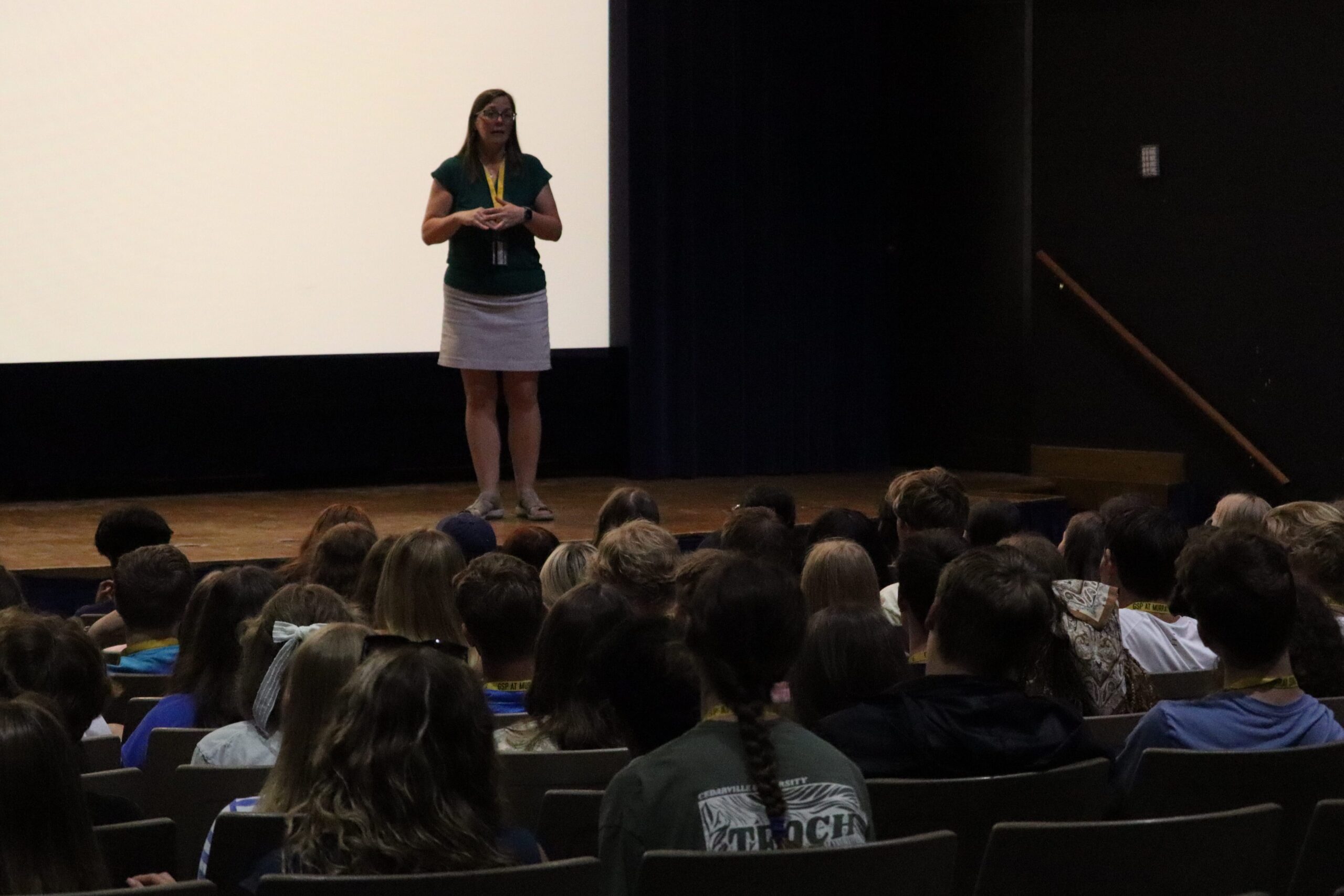
On Sunday, July 12, scholars had the opportunity to listen to Jen Price, Executive Director of GSP, speak in the Curris Theater in a session titled “The Science and Art of Stress Management.” In many ways, this session reiterated a few known ways to manage stress, but also rivaled the traditional thoughts on the topic.

Although normal stress is a key part of survival and regulation for the body, overwhelming stress for extended periods of time can have unhealthy physical and mental effects. One issue with this is that our current generation is actively experiencing higher and higher levels of stress, leading to fatigue and exhaustion. Thankfully, GSP has been a place of lower stress levels for scholars through constant communication with peers and periods of relaxation and fun helping to combat the stress epidemic.
Each scholar took part in a short test at the beginning of the session. This test is known as the anxiety perceived stress scale. The test includes 10 questions, each answered on a scale from one to four, with some questions phrased differently in terms of positivity and negativity. Questions that were phrased positively would then be reverse scored to find a stress level. Scholars were asked to recall their most stressful month when answering these questions. Stress levels ranged from low (score 14 and under), moderate (score from 15-26), and high (score 26+). This activity offered a good transition into direct conversation over stress management.

Jen Price began by asking scholars directly which strategies they use to combat stress. Scholars responded with many answers such as journaling, napping, and asking for help. Many methods were then presented to scholars over the course of the presentation. One of the first was eating the frog. This strategy consists of completing the task that you feel least inclined to do first. Further strategies included exercising, sleeping nine or more hours, eating healthily, and asking for help.
Jen Price expressed another major point relating to stress regulation: practicing positivity. One way to do this is by implementing simple acts of kindness into everyday activity. Another way is to visualize and anticipate positive outcomes, as well as taking part in activities that produce a ‘flow state’ mindset which is when the mind focuses and executes functions efficiently, this works by countering anxiety and focusing on your personal strengths. Price also mentioned writing gratitude letters as another great way to reduce stress, as well as to work through the value of expression.
Jen Price challenged traditional methods of stress reduction, the first being the method known as venting. This method does help in relieving the stress of holding in emotions and information. In many cases, though, venting occurs after much time has passed since the initial incident, meaning that in that time you would have calmed down, only to be riled back up in recalling the situation. The other method mentioned was taking deep breaths. Taking longer breaths does help in mildly stressful situations when it comes to regulating the body, but in high-level stress situations, deep breaths can actually result in an increased risk of hyperventilating and subsequently passing out.
As scholars soon depart the Governor’s Scholars Program, they will return to an environment more stressful than the one they have endured for the last five weeks. By keeping the strategies and methods provided by Executive Director Jen Price in mind, dealing with this transition, and what is to come after such, becomes a little less daunting.