
By Riley Young | July 15, 2026
On July 4th, 2026, the United States celebrated its 250th anniversary. While some commemorate this event with extravagant fireworks, festivities, and barbecues, others take the time to appreciate the values and principles which the country was built upon and which greatly shape US culture. The right to free speech is one particularly formative value, utilized daily by citizens across the country. Despite its importance, many are unaware of the history of this right and how it has evolved over time.
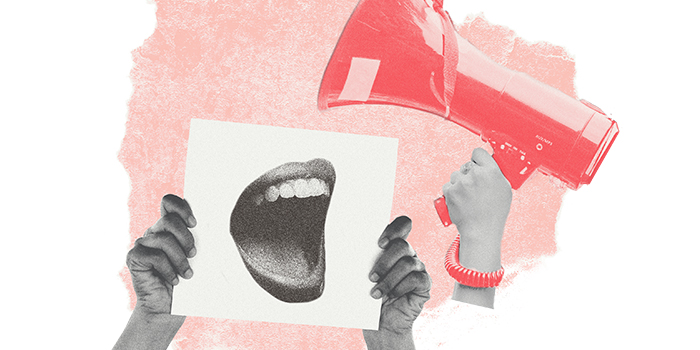
Freedom of speech, frequently thought of as a staple in modern United States culture, was not always guaranteed for residents. The Framers, or the individuals who wrote the U.S. Constitution, included this right in the First Amendment because of their lived reality under British rule. In early Britain, people were charged with hearsay and treason, or betraying the Church and the current leader (Bramley, 2025). This was one of the many reasons why early colonists decided to leave Britain for America, but even then, they were not safe. Members of the 13 colonies were prohibited from speaking critically of the British government or its officials. If they did, they were at risk of facing seditious libel charges–that is, being arrested for printing material with intent to bring contempt to a political authority (Reynolds, 2016). Prior to 1700, 1244 prosecutions were made in the colonies against individuals for seditious speech (Reynolds, 2016).
As a result of this, the Framers created the First Amendment, granting rights to free speech, petition, assembly, and worship. This was largely inspired by the work of William Blackstone, one of the strongest proponents for free speech in 18th century England (Khan, 2002). Blackstone asserted that freedom of speech and the press was vital to maintaining a free state, and that there can be very few limitations placed on what information is published (Khan, 2002). Many of the Framers felt very strongly about this notion, so in the first iteration of the First Amendment, James Madison wrote, “The people shall not be deprived or abridged of their right to speak, to write, or to publish their sentiments; and the freedom of the press, as one of the great bulwarks of liberty, shall be inviolable” (Khan, 2002). While this was later edited, as not all speech can be permitted for the purposes of public safety, it speaks to the Framers’ passion for individuals’ right to speech and the poor conditions which they were subjected to under British rule.
The First Amendment, as seen in the Constitution, reads that “Congress shall make no law respecting an establishment of religion, or prohibiting the free exercise thereof; or abridging the freedom of speech, or of the press; or the right of the people peaceably to assemble, and to petition the government for a redress of grievances” (Cornell). This essentially allows individuals to express their opinions without fear of government persecution or interference. These opinions are not limited to verbal and written communication; symbolic speech is also protected under the First Amendment, which includes nonverbal communications such as clothing and actions (Roos, 2017). In modern times, there are relatively clear expectations for this amendment’s enforcement and application. Certain things, such as obscene material, plagiarism, libel and defamation, true threats, and speech inciting criminal activity are not protected by the First Amendment (Roos, 2017).
Much of how the First Amendment is enforced and applied has been determined through Supreme Court cases that have set a legal precedent. Landmark cases such as Schenk v. United States (1919), NYT v. Sullivan (1964), Tinker v. Des Moines (1969), and NYT v. United States (1971) are especially noted for their role in shaping the First Amendment. The case Schenk v. United States (1919) created a limitation on speech stating that, if the statement creates a clear and present danger, it is not permitted by the First Amendment (ALA, 2017). For journalists, the case NYT v. Sullivan (1964) was monumental, as it created the determination that, in order for speech to be officially considered libel, there must be clear intent to harm or to damage an individual’s reputation (ALA, 2017). Students are benefitted by Tinker v. Des Moines (1969), which asserts that students do not lose their right to free speech once the school day begins and permits the use of symbolic speech within educational establishments (ALA, 2017). Under NYT v. United States (1971), the freedom of the press was protected, as Richard Nixon–the President at the time–attempted to exercise prior restraint and prevent classified documents from being published, and this action was deemed unconstitutional (ALA, 2017). These cases are vital in protecting the rights of citizens of all kinds, and life in the United States would not be the same without them.
Though much of the history of free speech is often untold, it is not forgotten. Citizens of the United States exercise this right daily, and their lives are changed for the better because of the Framers’ decision to prevent anyone from undergoing the same persecution they faced simply for speaking as they wished. More people should appreciate the sacrifices that the Framers made on this holiday and take the time to think deeply on what it truly means for speech to be free.