This Tuesday, July 14, reporters from the GSPost visited the Film Studies focus area. The class discussed topics such as different movie genres and kinds of shots.
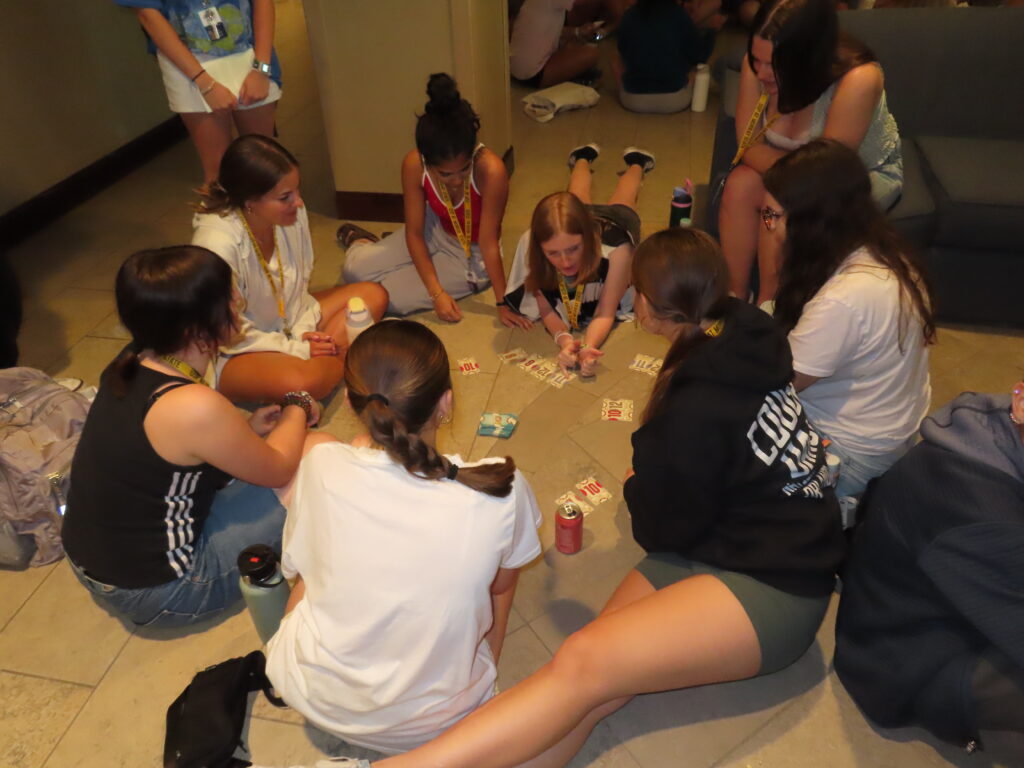
Clay’s film studies class met in Faculty Hall Rm 503. They began class with an activity to start their project for the week. The Scholars were split into groups of four to five, and each group had a member to go up to the magical wizard (Clay). The ‘magical wizard’ was the mastermind of it all, graciously giving each group three cards. The cards had a variety of film attributes such as genres, tactics, shots, and more that the Scholars had to incorporate into their weekly films.
After the game, the group switched gears into lecture and discussion about the different types of film shots in iconic movies. Clay gave a presentation where he introduced a number of different shots, some that were recognizable, and some that Scholars hadn’t heard of before. They discussed wide shots, full shots, medium shots, close-ups, extreme close-ups, low-angle shots, high-angle shots, eye-level shots, bird’s eye view shots, and worm’s eye view shots. Each shot introduction had examples from specific films, which included: West Side Story, 12 Angry Men, Kill Bill Vol. 1, and more. The film studies class had insightful and communicative discussions with Clay and each other between each shot. They shared their perspectives, asked questions for clarity, and discussed other examples of their favorite films that showcased whichever shot they were talking about.
Clay explained that film studies extend beyond simply watching movies. In his class, scholars are challenged to understand why films communicate meaning so effectively. “Essentially, we are discussing… how film serves as an art form,” he explained. “Nothing in film is by accident. Everything is purposeful.” Throughout the five-week focus area, Scholars learned to examine every filmmaking decision, from camera angles and lighting, to editing and sound, in order to determine the messages filmmakers intend to communicate.
Clay emphasized that there is no single way to make a good film. While he appreciates films that communicate deeper meaning through thoughtful filmmaking choices, he also believes movies can simply exist for entertainment.
He encouraged viewers to ask themselves one important question when watching a film critically: “What are the filmmakers trying to tell me with this film?” From there, viewers can begin paying attention to the many intentional decisions that shape a film’s meaning. It was a fitting conclusion to a course built around looking beyond the screen and understanding the artistry behind every frame.
After the interview with Clay, some of the Scholars answered questions about their personal experiences during the past few weeks in their focus area. Interviewees included Alden, Gunnar, Kenneth, and Seth. Each of the scholars answered a variety of questions ranging from experiences in class, to experiences with Clay as their teacher, to thoughts on the Classic Film Series.
Alden explained that before the summer, he had never used Adobe Premiere. However, through Clay’s instruction, he learned how to edit films and apply those skills to the group’s weekly projects. “And also, as you guys saw in class, he teaches a lot about different filmmaking techniques that we sometimes use in our movies,” Alden mentioned.
Gunnar followed after Alden. Gunnar highlighted one of the most enjoyable parts of the program that intertwined within his focus area: the Classic Film Series. His favorite screenings included The Social Network, 12 Angry Men, and Get Out, each offering unique opportunities for discussion.
Kenneth spoke about the collaborative side of film production. “We definitely had to learn how to work well with people who have alternating ideas. We have to learn how to compromise to get the job done and to actually produce a short film,” Kenneth said.
Seth reflected on how he will use what he has learned from film studies after the Governor’s Scholars Program. Although he does not plan to pursue filmmaking professionally, he shared that he intends to continue creating short films as a hobby because they provide “a great way to express yourself creatively.” His response demonstrated that the lessons learned in film studies extend far beyond the classroom.
It can be said with confidence that the film studies focus area has had an intellectual, interesting, and insightful five weeks with an amazing focus area (and general studies) educator, Clay Johnson.