MURRAY, FH (GSPost) – On Wednesday, July 15, the forensic science focus area viewed a speech about DNA’s crucial role in forensic science, and conducted a simulation of Gel Electrophoresis for a case study.
The class started with a whole-group discussion, and writing a Thank You letter for guest speaker Jim, who came to GSPMurray to speak with the forensic science scholars and stage an engaging forensic investigation activity. Afterwards, scholars took notes about a speech on how to interpret gel electrophoresis.
Gel electrophoresis is a laboratory technique that separates DNA fragments based on their size and charge. DNA samples are loaded into wells at one end and an electrical current is applied, pulling them through the gel. Negatively charged samples (larger fragments) move towards the positive electrode, with smaller fragments moving quicker to the positive end. When the gel is stained, the DNA fragments can be seen as bands, representing a group of DNA fragments. In Forensic Science, this technique has many applications, such as crime scene analysis to identify a person, find a suspect in a case, or confirm biological relationships.
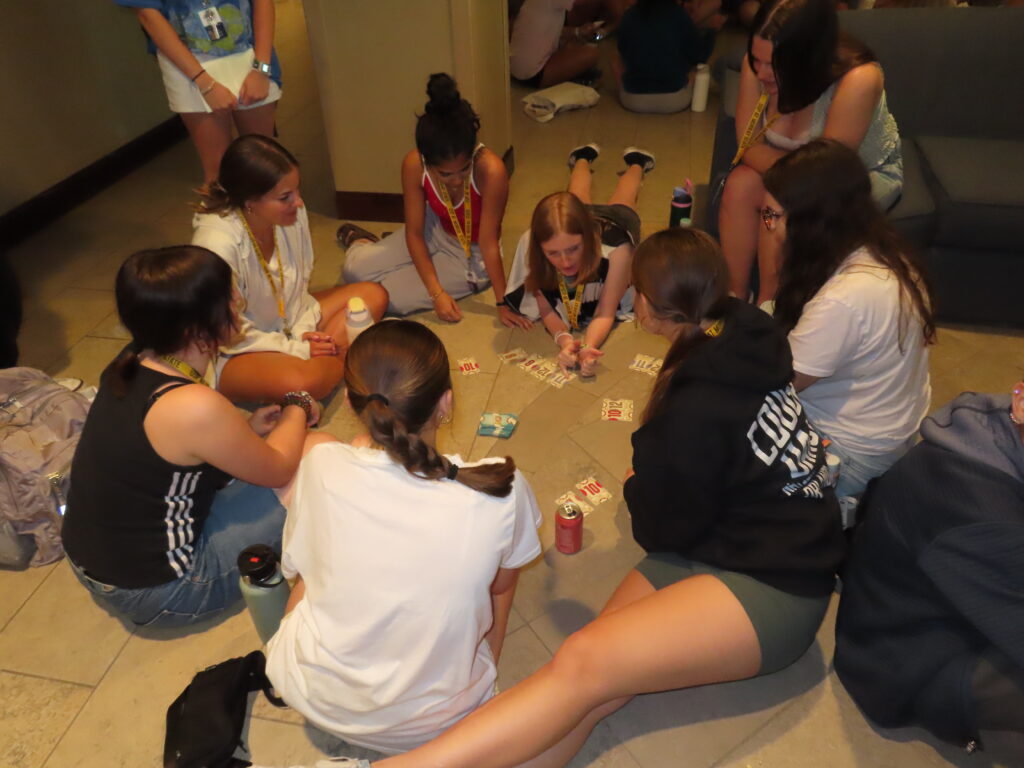
After, the class began their simulation of gel electrophoresis. Scholars placed sticky notes to represent the location of the DNA bands, in order to determine the connection between victims, persons of interest, and DNA samples. Journalists from the GSPost interviewed scholars about their favorite elements of the class and skills they’ve developed.
Siobhan shared her favorite experience in the class, conducting a forensic interrogation involving one of the office members who came into their class and stole their guest speaker. It was really interesting as scholars got to apply some of the things they learned about forensics and interrogation methods.
Another scholar, Sam mentioned his take away from the class “one thing I’ve liked so far is we did a bite mark analysis lab, and so each of us, like one group got ham, one got cheese, and one got apples. Then, we tried to match people to their bite marks in those specific foods.”
Joanna is the instructor for Forensic Science and a first year faculty member of the Governors Scholars Program (GSP). She shared how her scholars had autonomy in some of the options for the class and which direction the course should take. Scholars decided to study the involvement of forensic science in wrongful convictions and use of critical thinking in the exoneration process. She described the experience so far and the challenge behind it as, “a complete adventure. Absolutely exhausting, super challenging. I have learned arguably more than my students have. Not so much about the content area, but I have learned so much about working with this entire crew of GSP scholars. It has been amazing and exhausting and fantastic all at the same time,” Joanna said.
Finally, Joanna shared a few takeaways she wanted her scholars to have at the end of the program.
Joanna noted the importance of critical thinking skills; she chimed, “so essentially, if and when they get appointed to a jury, regardless of what they study at university, they are prepared as critical thinkers to have a very healthy respect for evidence as well as a process that’s required for gathering it effectively, and how it can and cannot be used.”
While scholars had initial expectations surrounding the class, many were surprised and found the class to be interesting and less science heavy. They developed critical thinking, strengthened analytical skills, and a deep understanding of real world issues.